
For the general public, a golf course is a picturesque expanse of green; however, in the realm of professional turf management, it is a “stringent testing ground” demanding the utmost from mechanical engineering, plant physiology, and soil dynamics. The seemingly simple act of “mowing” is, in fact, the ultimate test of a machine’s acoustic performance, terrain adaptability, and intelligence. This analysis combines industry pain points with cutting-edge technology to dissect the digital transformation of golf turf care.
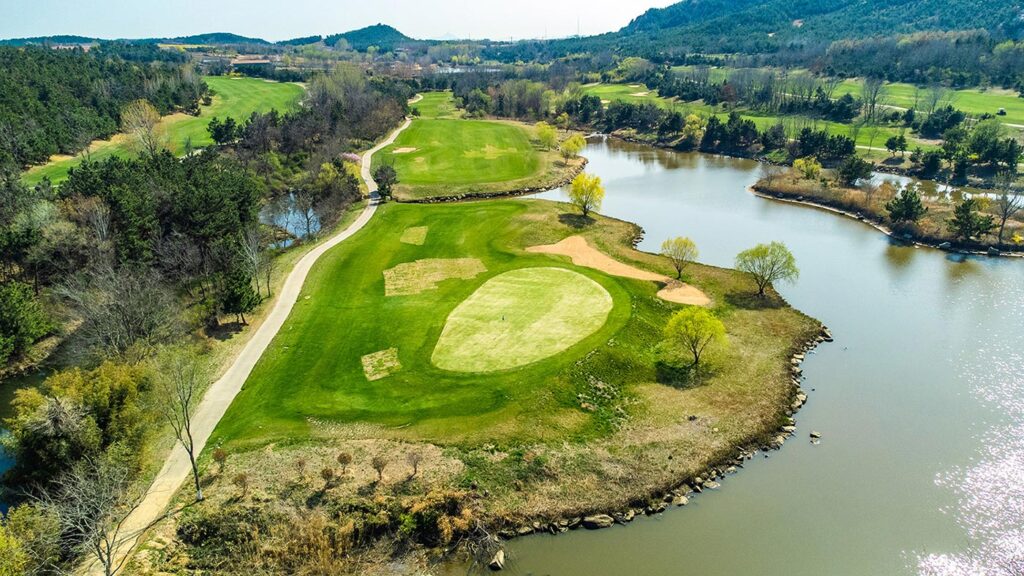
01. Scenario Deconstruction: Differentiated Challenges Across Three Core Zones
A golf course is not a homogeneous lawn; different zones impose distinct requirements on robot deck height adjustment, off-road capability, and navigation algorithms.
| Zone | Physical Characteristics | Mowing Standards | Traditional Machinery Pain Points | Robotic Core Requirements |
|---|---|---|---|---|
| Greens | Smallest area, micro-contours | 2-4mm, Daily mowing | Scalping: Blades cut into soil, uprooting grass. Soil Compaction: Heavy machinery crushes roots, causing suffocation. | Ultra-lightweight, zero marking, millimeter-level height consistency. |
| Fairways / Tees | Medium area, high foot traffic | 10-15mm, 3-4 times/week | Rutting: Tires sink into soft, wet soil. Tearing: Differential steering damages turf during turns. | Multi-directional striping, flexible chassis to prevent damage. |
| Roughs | Largest area, steep slopes (30°) | 30-50mm, 1-2 times/week | Blunt-force tearing: Dull blades cause brown tips & disease. Slippage: Loss of traction causes soil erosion. | 30°+ climbing ability, 4WD traction, autonomous obstacle avoidance. |
02. Deep-Rooted Industry Pain Points: The Soil Dynamics Perspective
The traditional “Labor + Heavy Fuel Machinery” model faces an irreversible crisis, with core contradictions centered on soil compaction and mechanical damage.
1. Soil Compaction & Root Suffocation
Traditional heavy-duty fuel mowers (e.g., 5-gang or 7-gang tractors) generate instantaneous Ground Contact Pressure often exceeding 150 kPa. This high pressure compacts soil pores, leading to:
- Expelled Oxygen & Water: Roots weaken due to oxygen deprivation.
- Increased Crusting Depth: Measured compaction layers can exceed 10mm, directly inducing turf diseases like Fusarium.
2. Mechanical Slip & Physical Tearing
- Scalping: On the micro-elevations of greens, rigid chassis machines easily dig into the surface.
- Turn Tearing: Relying on differentials or locking wheels creates massive lateral shear forces on wet turf, ripping up healthy grass.
03. Technological Breakthrough: The XuanNiao R + Matrix-core System Solution
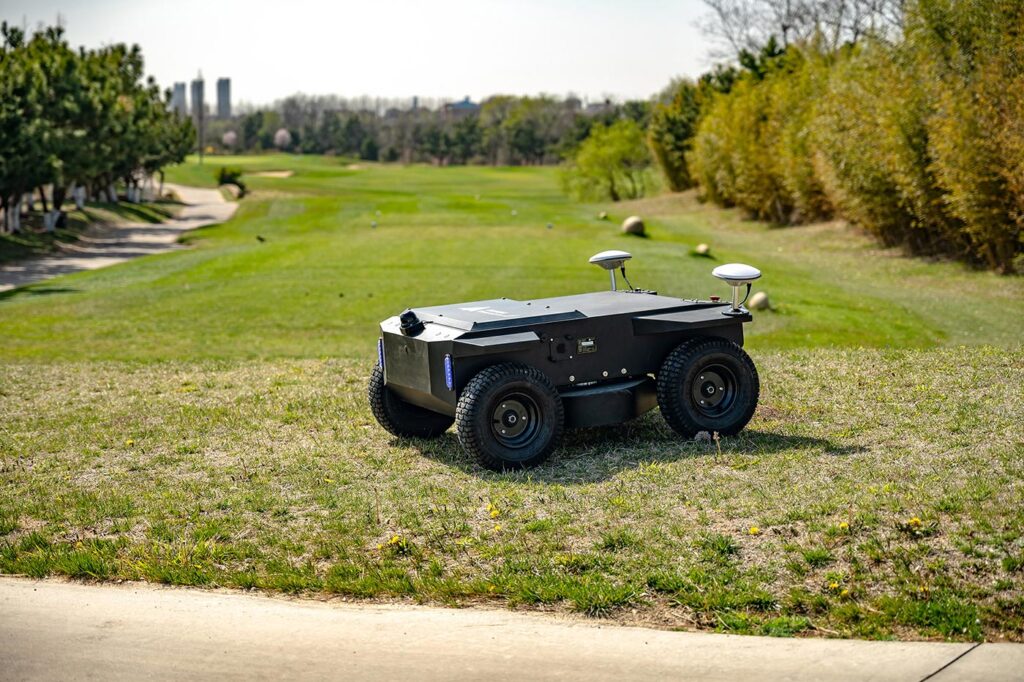
Facing these challenges, the new generation of intelligent equipment—exemplified by the XuanNiao R-1 All-Electric 4WD Chassis combined with the Matrix-core Universal Navigation System—provides a systematic reconstruction from powertrain to chassis dynamics.
1. Chassis Dynamics Reconstruction: Minimal Compaction & Zero Damage
- All-Electric Drive: Eliminates exhaust emissions and fuel leaks entirely, achieving acoustic “stealth” for nighttime or early morning operations without disturbing play.
- Ultra-Low Pressure Design: By optimizing battery layout and structure, instantaneous ground contact pressure is strictly controlled at around 12.5 kPa (less than 1/12 of traditional machinery). This suppresses soil compaction depth to within 1mm, maximizing root respiration.
- Torque Vectoring Control: The 4WD system senses wheel slip rate in real-time, dynamically distributing torque. This maintains extreme grip on slopes over 30° and wet grass, eliminating turf tearing caused by slippage (measured mechanical damage index below 5%).
2. Multi-Source Fusion Navigation: All-Weather Centimeter-Level Positioning
Addressing RTK signal multipath effects caused by tall trees, the system builds a multi-layered reliable navigation architecture:
- RTK-GNSS Global Positioning:
- Supports dual modes: local base stations (NB-IoT transmission) and network differential (NTRIP/4G).
- Fuses GPS, BeiDou, and Galileo constellations to achieve static error <2cm and dynamic error <5cm, meeting the precision demands of fairway lines and green edges.
- 3D LiDAR Local Positioning:
- In tree-lined roughs or zero-light night conditions, 3D LiDAR constructs high-precision point cloud maps to achieve centimeter-level absolute positioning and semantic obstacle avoidance.
3. Intelligent Task Planning: From “Experience” to “Algorithm”
- Multi-Directional Striping: To prevent grain and enhance aesthetics, the system automatically plans global coverage paths (CPP) in different directions (North-South, East-West, diagonal), creating professional-grade turf patterns.
- Multi-Level Safety & Flexible Obstacle Avoidance: Combining vision and LiDAR semantic segmentation, the system accurately identifies bunker edges, water hazards, and moving personnel/carts, instantly replanning local paths.
04. Commercial Value Transition: The Full Lifecycle ROI Model
Deploying an intelligent maintenance system is not merely a tool swap; it is a paradigm shift in business models.
1. Breaking Time Window Constraints (Maximizing OEE):
The silent nature of the all-electric architecture enables “night operations.” This cedes prime daytime hours entirely to golfers, significantly boosting Overall Equipment Effectiveness (OEE).
2. Restructuring Labor Costs:
Under intelligent swarm scheduling, a single patrol staff member can monitor multiple robots simultaneously via backend control. This frees expensive turf specialists from heavy driving duties, allowing them to focus on higher-value tasks like disease prevention and soil improvement.
3. Quality Consistency:
Automated operations eliminate human fatigue and experience gaps. Constant operating speeds achieve industry-leading turf smoothness and visual consistency, directly elevating course ratings and member satisfaction.
Conclusion
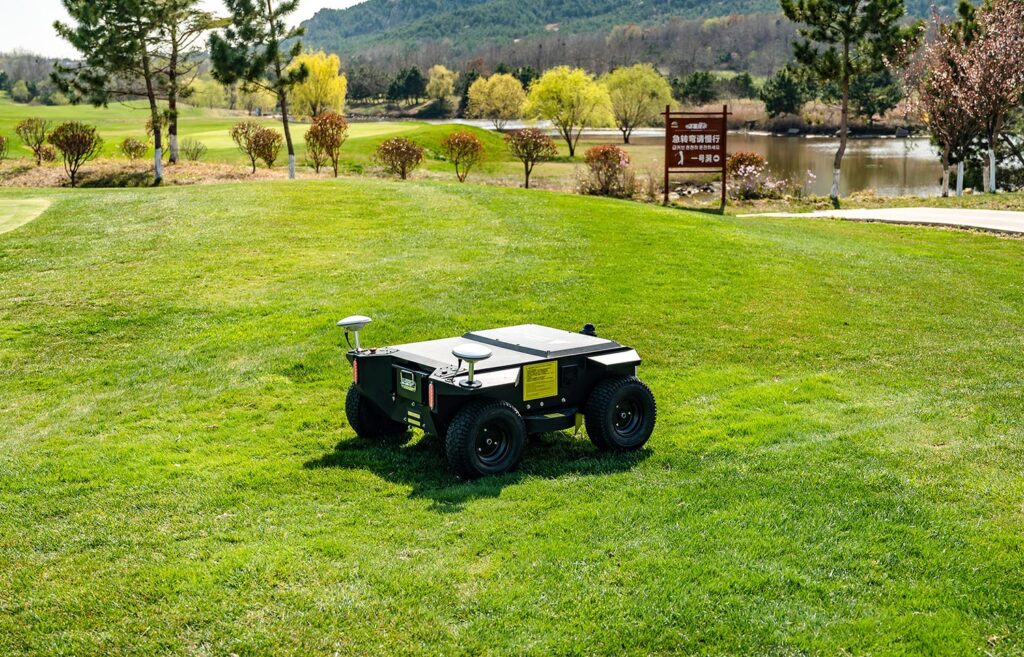
Golf course turf care is a journey of reverence for nature and exploration of technology. The shift from traditional “labor-intensive maintenance” to “data-driven asset management” represents not only an efficiency gain but an upgrade in maintenance philosophy. Represented by the XuanNiao R-1 and Matrix-core architecture, intelligent all-electric robots are redefining the standards for high-end turf care, ensuring every inch of the green performs at its peak under the protection of technology.