
To be frank, relying entirely on manual weeding for farming today is making agricultural operations increasingly unprofitable.
Replacing manual labor with machinery for weed control has become an inevitable trend in modern agriculture . Today, let’s look at a clear cost comparison—domestic vs. overseas, manual vs. robotic—to see just how significant the difference is.
1. A Financial Reality Check for Growers
Let’s lay out the math for anyone managing agricultural land:
- Domestic Reality (China): Currently, manual weeding costs around 40 RMB per mu (approximately $240 RMB / $33 USD per acre) under stable market conditions. For detailed tasks, such as clearing under fruit trees or along ridge edges, this rate increases further.
- Overseas Reality: In Europe and North America, manual labor is even more prohibitive, with weed control costs reaching $180 to $900 per acre ($30 to $150 per mu). Many overseas farm owners have noted that weeding expenses can easily exceed the cost of the seeds themselves.
- Complex Terrain Premium: For challenging terrains like hills, mountains, and steep slopes where manual work is difficult, labor rates rise annually. Growers often face the dilemma of being unable to find workers even when offering a premium.
Anyone who has worked in agriculture knows the struggle firsthand:
Weeding is an exhausting, labor-intensive chore. Bending over for hours under the sun and rain is physically demanding. Younger generations are increasingly unwilling to do it, experienced workers are harder to recruit, and wages continue to climb. Manual weeding has quietly become one of the largest hidden expenses in farming .
2. A New Approach: Machine Operation at Just $1.65 per Acre!
Rather than struggling with rising labor costs, transitioning to smart, remote-controlled mowers offers a direct path to sustainable cost reduction ✅.
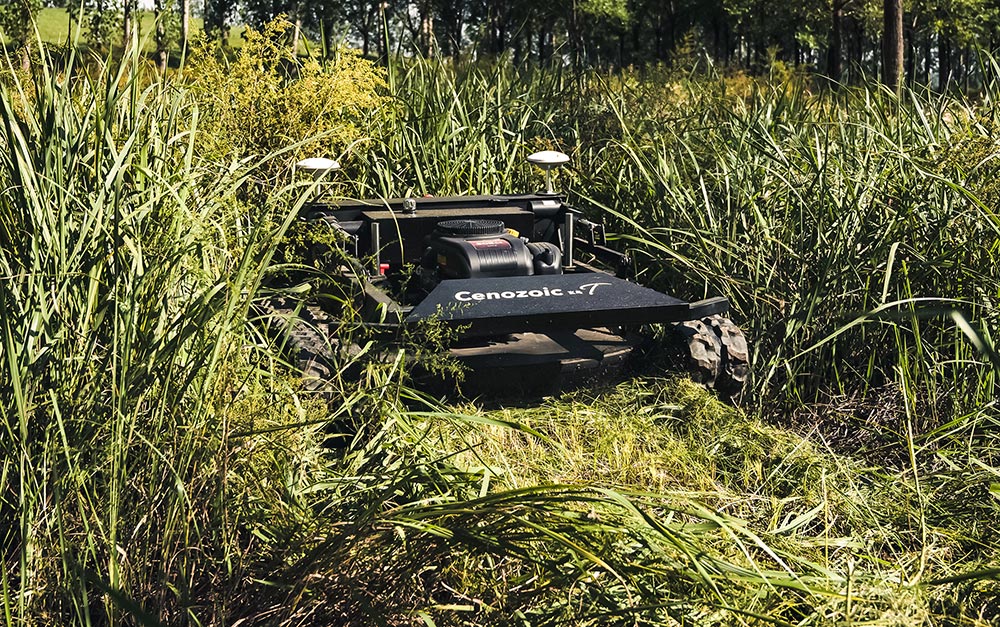
Take the Suzhou Xinzuobiao Intelligent “Xuanniao” Series robotic mowers as an example:
- Significant Cost Savings: Factoring in energy consumption, depreciation, and maintenance, the comprehensive cost of machine operation is only about 2 RMB per mu (approximately $1.65 USD per acre). Compared to the manual rate of 40 RMB per mu ($33 USD per acre), weeding costs are reduced by roughly 95%.
- Significantly Higher Efficiency: Beyond operating much faster than manual labor, the cost difference alone makes robotic weeding highly superior to traditional manual methods .
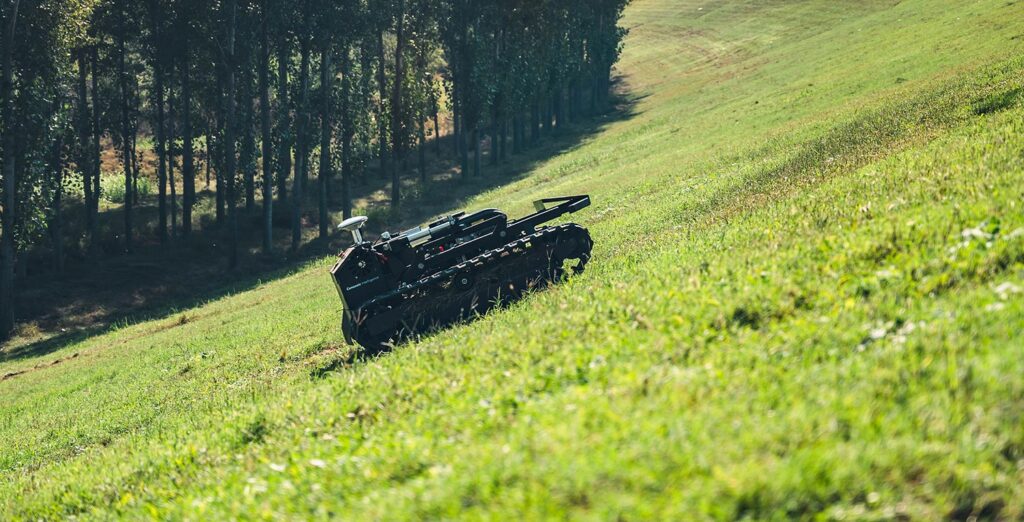
- Terrain Adaptability: Whether working on flat fields or navigating steep 40-degree orchard slopes, these machines operate reliably without slipping or getting stuck.
3. Why Robotic Mowers Are Becoming a Critical Need
This technology is not just about the cost savings; it directly addresses the fundamental pain points of modern agriculture:
(1) Solving the Labor Shortage
With younger generations opting out and aging farmers finding physical labor too demanding, automating repetitive, high-intensity chores preserves valuable human labor. This ensures that agricultural production remains sustainable despite demographic shifts.
(2) Navigating Complex Terrains and Protecting Crops
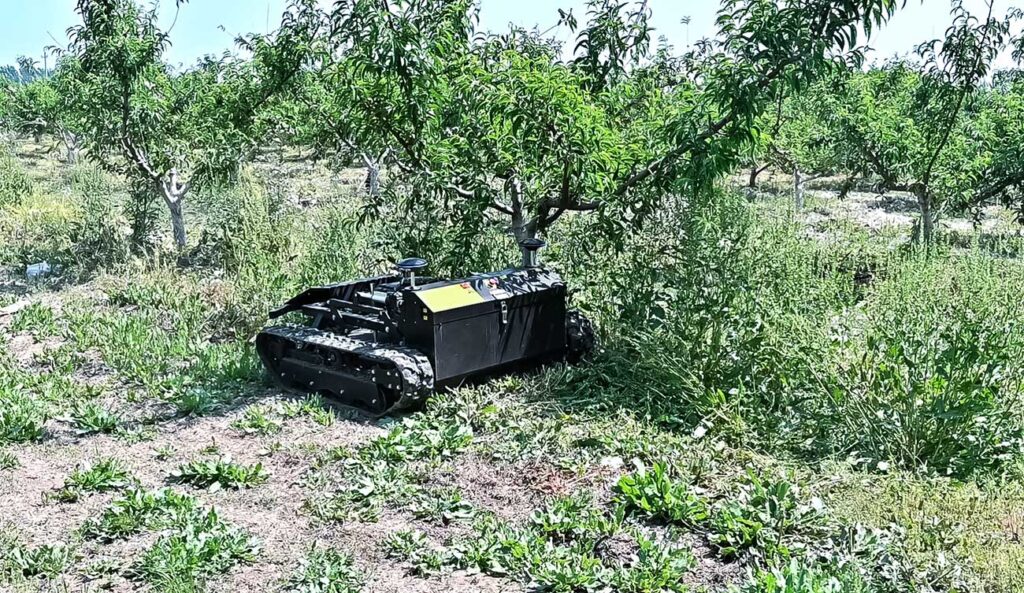
Tracked models (such as the Xuanniao T1) exert extremely low ground pressure. Even in muddy orchards after rain, they will not compact the soil or damage crop root systems. Unlike manual weeding, which can easily nick or damage young saplings, the standardized pathing of our machines is significantly safer for crops.
(3) All-Weather Operation to Seize Key Windows
Manual weeding is highly dependent on weather conditions and worker availability. Machines, however, require no downtime. As long as fuel or battery levels are maintained, they can operate during short breaks in rainy weather, preventing weed overgrowth and helping growers stay on schedule.
4. Customer Testimonials: From Skepticism to Appreciation
An owner of a 160-acre (1,000 mu) citrus orchard:
“Summer weeding used to be my biggest headache. Workers charged 300 RMB a day, complained about the heat, and often missed spots. Last year, I purchased the Xuanniao T1. Although it’s a robust hybrid-powered machine, its 35-inch (90 cm) cutting deck gets the job done incredibly fast. The calculated cost is just over 2 RMB per mu (approx. $1.65 USD per acre). Best of all, it climbs 40-degree slopes on its own, so I no longer have to worry about worker safety or falls on steep terrain.”An overseas farm owner (purchased via export channels):
“Hiring weeding services in the US is extremely expensive, often costing over $100 per acre. Since importing the Chinese Xuanniao R1 mower, the pure-electric drive operates quietly and is environmentally friendly. I can manage the work easily through a smartphone app. The cost advantage is highly apparent; for us, this machine is an exceptional investment.”

5. Conclusion: What is the Key to Profitable Farming Today?
The key to agricultural profitability today is no longer just hard manual labor, but leveraging technology to lower costs and upgrading equipment to boost efficiency.
High labor costs do not have to erode your profit margins. By replacing traditional hand tools with remote controls, manual effort with battery power, and delegating repetitive tasks to automation, you can better protect your bottom line 🌿.
Smart robotic mowers are not just a trend—they represent a vital, cost-effective solution for modern agricultural operations.